

When it comes to digital marketing, understanding the differences between blogs and landing pages is essential as they serve different purposes.
At Artonic, we specialize in digital marketing and website design. With over 19 years of experience, our team has helped countless businesses boost their online sales through expertly crafted landing pages and in-depth blogs.
In this article, we’ll explore the key differences between a blog vs a landing page.
Summary (TL;DR)
Here’s a summary (TL;DR) of the key differences between a blog vs a landing page.
- Purpose & Target Audience: Blogs are designed to educate your target audience. They help attract organic traffic and build long-term relationships. In most cases, landing pages focus on encouraging visitors to perform a specific action, such as making a purchase or downloading a resource.
- Layout: Blogs are text-heavy and follow a single-column layout. Landing pages feature a more digestible layout designed to make content easier to digest and keep the visitor’s attention on a specific action.
- Content: Blogs provide in-depth, detailed content, covering a variety of topics to build authority and educate readers. Landing pages offer brief, persuasive content designed to encourage quick decisions and conversions. With a good SEO strategy, landing pages can also attract highly qualified organic traffic.
- Effort & Implementation Speed: Blogs are usually easier to create and implement due to their simple layout while landing pages involve more upfront planning, design, and testing to optimize for conversions. However, there are exceptions to this, as creating in-depth blogs can also take a considerable amount of time.
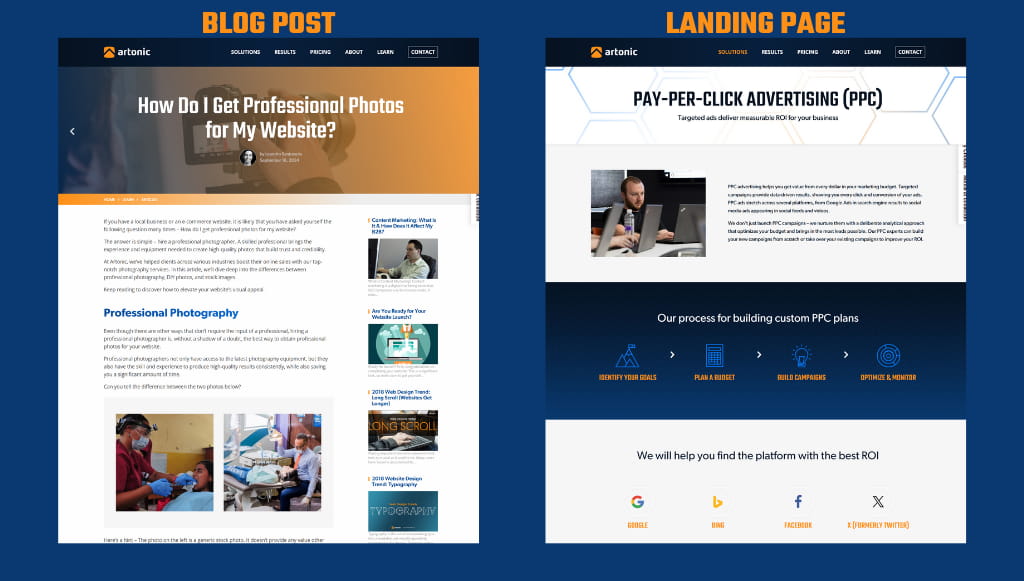
Here’s a quick comparison using a blog post and a landing page on our website.
What are Blog Posts?
A blog post is essentially an article published on a website, typically focusing on a specific topic. It is part of a blog, which is a regularly updated section of a website that shares information, insights, or opinions. Blog posts aim to provide readers with value by addressing their questions or interests.
Note: A Blog is a section of a website that stores blog posts, but blog posts can also be referred to as “blogs”.
Some examples of blog posts include:
- What is digital marketing?
- How much does web design cost in Michigan?
In fact, the article you are reading right now is a Blog post!
What are Landing Pages?
Landing pages are specifically designed to convert visitors coming from search engines, social media, and other traffic sources into leads or customers. Landing pages are action-oriented and optimized to guide users toward a particular goal, such as signing up for a newsletter, downloading a resource, or purchasing a product.
In other words, landing pages are crafted to provide just enough information to persuade users to take immediate action, without overwhelming them with content.
In digital marketing, landing pages are often used in campaigns, including paid ads, email marketing, or Search Engine Optimization (SEO). Their success is measured by conversion rates, making the design and user experience (UX) critical to achieving business goals.
Some of the most common types of landing pages include:
- Click-Through Landing Page: A page designed to guide visitors to take the next step, usually leading to another page with a stronger conversion focus. These pages contain more information about the services/products, and background of the business than other types of landing pages.
- Paid Advertising Landing Page: A page created for a specific ad campaign, designed to convert traffic from paid ads by focusing on a single offer or message. This type of landing page is often extremely short and simple.
- “About Us” Landing Page: A page that introduces the company or brand, providing information about its mission, history, and team to build trust.
- Pricing Page: A page that presents pricing options, and payment plans to help potential customers make purchasing decisions.
- “Thank You” Landing Page: A page shown after a visitor completes a desired action, such as filling out a form or making a purchase. These landing pages usually contain links to other offers or resources.
Key Differences: Blog vs Landing Page
The key differences between a landing page vs a blog post include purpose, layout, content, and effort.
Purpose & Target Audience
A blog is typically designed to inform or educate an audience over time. It’s an ideal platform for sharing a wide variety of content such as first-hand research, in-depth guides, and even personal opinions. Blogs are meant to attract organic traffic and build long-term relationships with readers.
Additionally, the target audience for blogs is often more diverse, consisting of potential customers, current clients, and even casual readers interested in the subject matter. It all depends on the topic you want to cover.
Here’s an example of a Blog Post: How Do I Get Professional Photos for My Website?

On the other hand, a landing page is laser-focused on conversion. Its purpose is to drive a specific action, such as making a purchase, signing up for a newsletter, or downloading a resource (There are a few exceptions to this, such as “Thank You” landing pages). Landing pages are better suited for promoting services and/or products.
The target audience for landing pages is usually more specific – people who have already shown interest in a product or service through ads, email campaigns, SEO, or other targeted marketing channels.
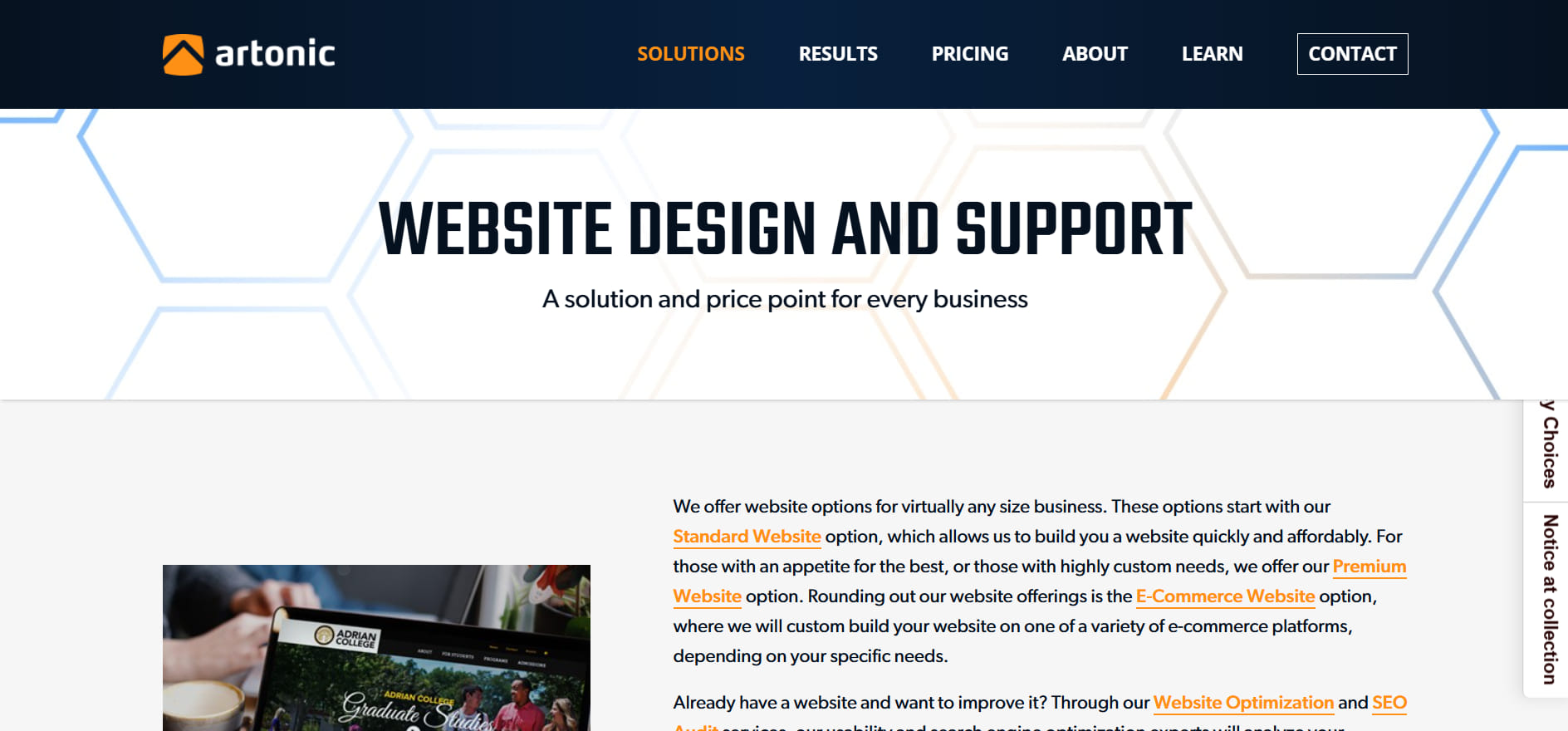
Here’s an example of a landing page from our website: Website Design and Support.
Layout
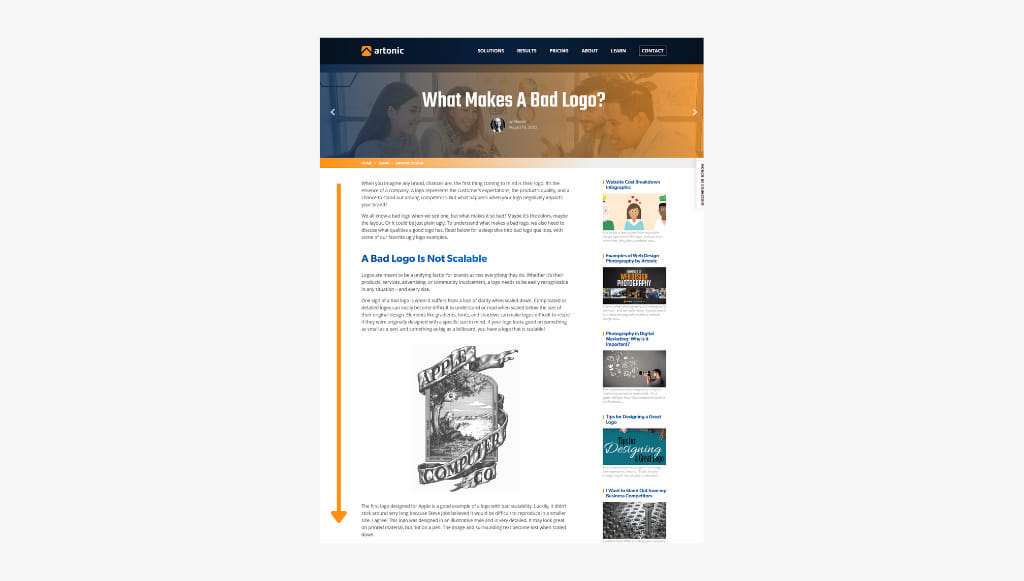
A blog is typically text-heavy and uses a scrollable format with headings, subheadings, and embedded images or videos to break up the content. The design is often very simple, focusing more on readability and less on guiding users to a particular action.
Blogs encourage longer user sessions, allowing readers to explore related posts and delve into various topics at their own pace.
Here’s an example from our blog: What Makes a Bad Logo?
In contrast, a landing page uses a more structured and visually compelling layout. The design is clean, with separate sections that direct the users’ attention to key information and a call to action (CTA).
Landing pages often include elements like large buttons, forms, testimonials, and striking visuals to encourage immediate action. The layout is typically short and concise, designed to minimize distractions and lead users quickly to conversion.
Here are a couple of examples from our landing page: Pay-Per-Click Advertising (PPC).
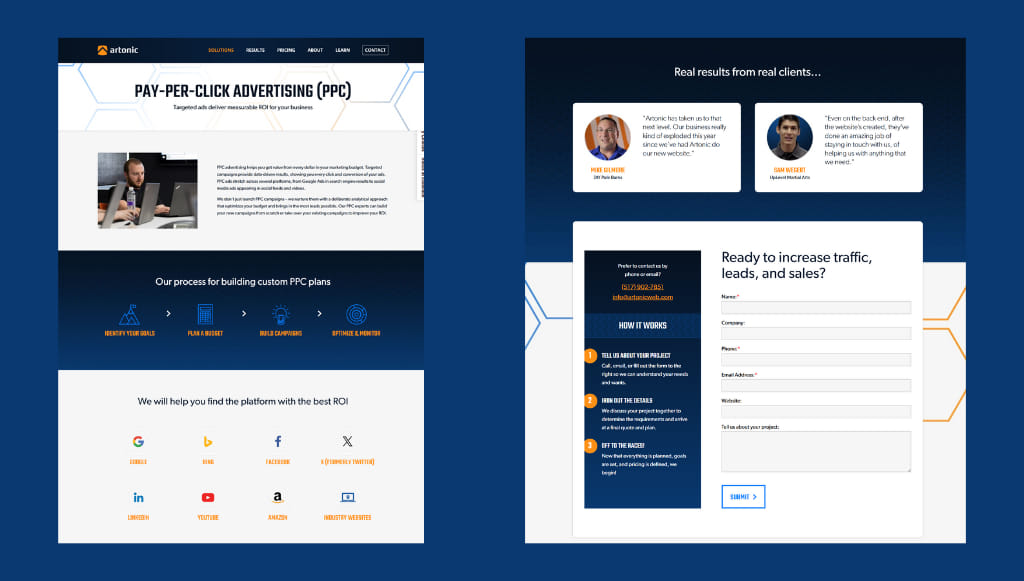
Some common sections of a landing page include:
- Our Process
- About Us
- Platforms/Tools We Use
- Case Studies
- Testimonials
- Forms
- Call To Action (CTA)
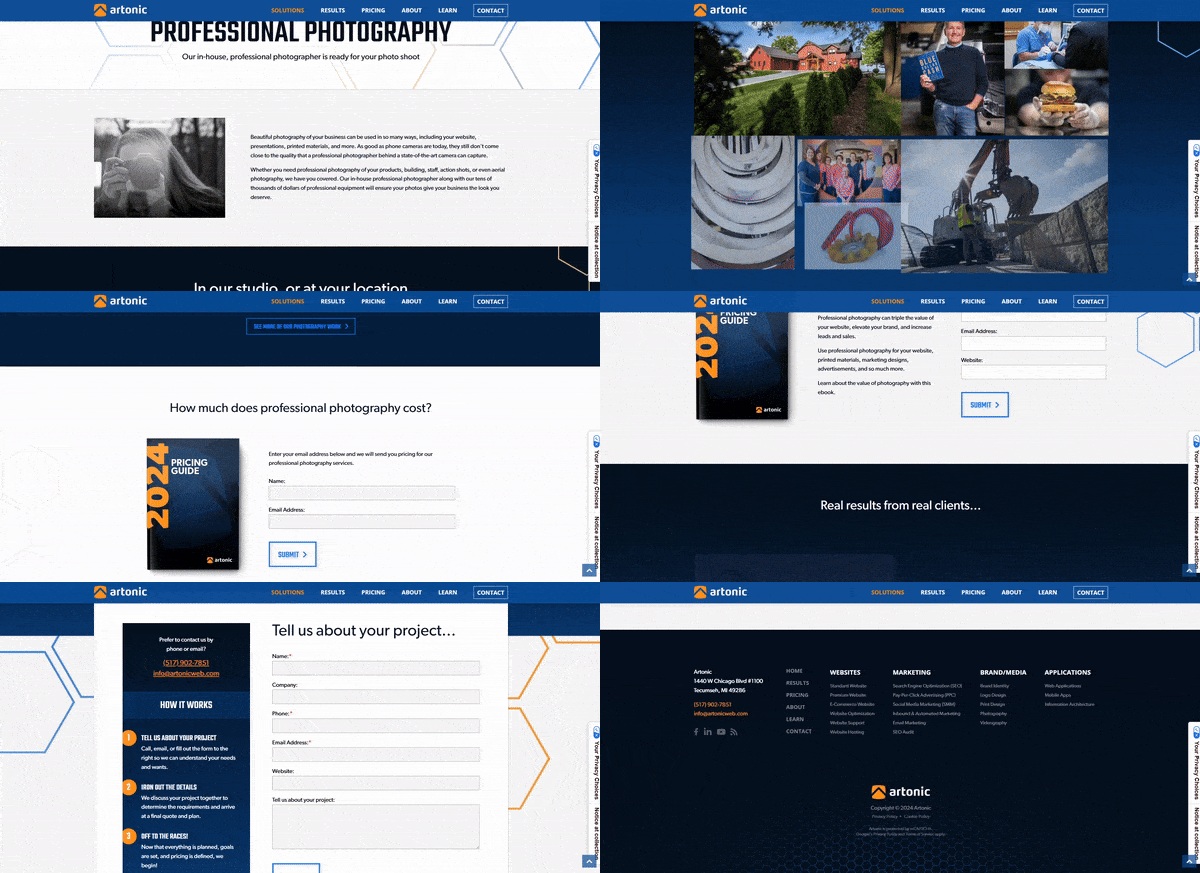
Landing pages also include special effects and animations like parallax scrolling, icon and image fade-ins, and more. These elements are specially designed to make the landing page look more professional and make it more attractive to visitors.
Here’s an example from our landing page: Professional Photography.
Content
When it comes to content, blogs are typically rich in information and cover a variety of topics related to the business or industry. They focus on delivering value through detailed explanations, insights, and analysis.
A blog post can be a few hundred to several thousand words long, offering depth and encouraging readers to spend more time engaging with the material. The content is also optimized for search engines, aiming to drive long-term organic traffic through relevant keywords.
Here are some blog post examples in various industries.
- Five Signs Your Chimney Needs to be Repaired
- Common Home Security Mistakes to Avoid
- How to Prevent Basement Flooding During Heavy Rain
- How Do I Get Business Insurance?
The content of a landing page is brief and to the point. There is little room for extensive information; instead, the content highlights only the most important points to facilitate quick decision-making.
Effort & Implementation Speed
Blogs can be faster and cheaper to create and implement since they rely mainly on text and often follow a standard template or layout.
However, the complexity of the blog post will determine the effort and time involved in its creation. For example, a single blog post answering some common questions related to your business can take as little as 1 or 2 hours, while an in-depth research with unique visual elements can take 5 to 10 hours and even more.
Landing pages, on the other hand, don’t need complex research or analysis, so writing content for them is often fairly quick.
The problem with landing pages is that they require considerable upfront planning and design effort. The goal is to create a highly optimized page tailored to drive conversions, so landing pages often include custom layouts, visuals, and testing to ensure success.
As a digital marketing agency, we have found that planning, designing, and implementing landing pages usually takes more time than writing and publishing a blog post but there are some exceptional cases where a blog post can take way more time than a standard landing page.
For example, we created an in-depth comparison guide of the best website visitor identification software. This article took over 10 hours due to the amount of research required.
Landing Pages vs Blog Posts: Which is Better for Conversions?
When it comes to conversions, landing pages are typically more effective than blog posts. The primary goal of a landing page is to drive a specific action. Every element of a landing page (its layout, content, and CTA) is designed to lead users toward this conversion goal.
Additionally, landing pages are often used in conjunction with paid advertising or SEO campaigns, which further boosts their conversion potential by attracting users who found the page through a relevant query and are already primed to take action.
Blog posts, while excellent for driving traffic and building trust, are not as directly geared toward conversions. Blogs are content-rich and informative, designed to engage and educate readers rather than push them to immediate action.
While blog posts can include links to a landing page or product, they are not as focused or persuasive in driving conversions.
Client Examples of Blog Posts & Landing Pages
Here are some examples from our very own clients so you can get a better view of the differences between a blog vs a landing page.
Blog Post Examples
These are some blog post examples.
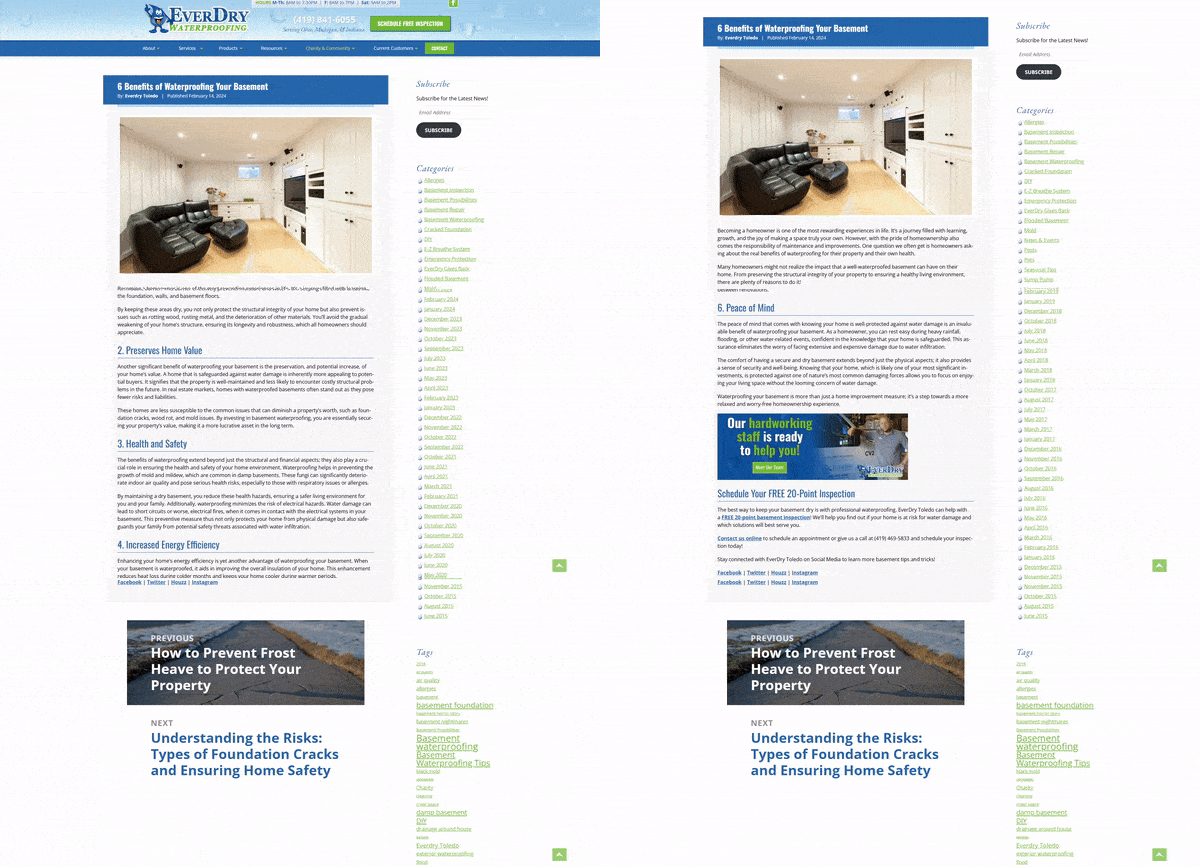
1. 6 Benefits of Waterproofing Your Basement – EverDry Toledo
This blog post provides visitors with a few benefits of waterproofing their basements. The blog post includes a couple of CTAs in the form of an image and text at the end.
Learn more about this case study by visiting our: EverDry Toledo SEO Case Study.
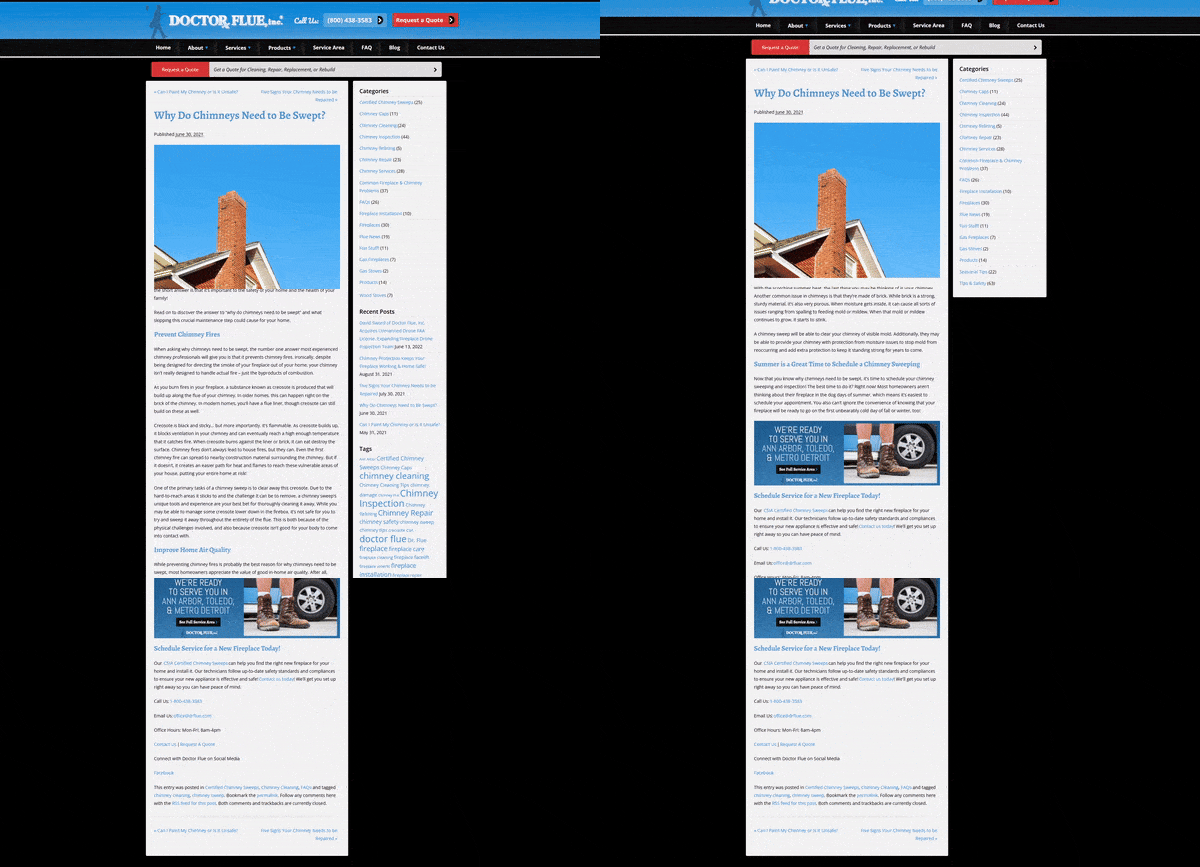
2. Why Do Chimneys Need to Be Swept? – Dr.Flue
This blog post provides a few benefits of sweeping a home chimney. These tips are provided by the team of experts at Dr. Flue. At the end of the article, you can find a CTA in the form of an image and text.
Learn more about this case study by visiting our: Dr. Flue SEO Case Study.
Landing Page Examples
Here are some landing page examples from some of our clients.
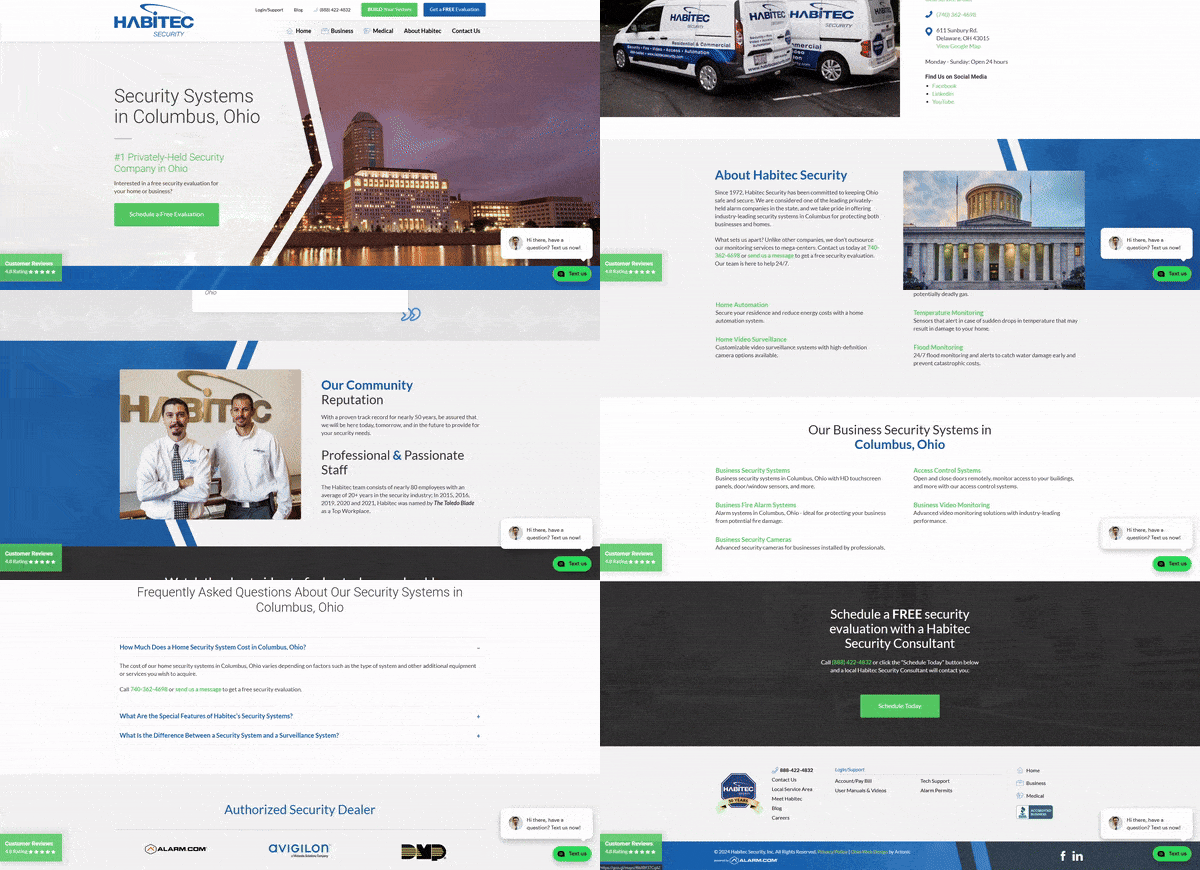
1. Security Systems in Columbus, Ohio – Habitec Security
This landing page was designed to provide information about Habitec’s security systems, background, and address to customers coming from Google and other search engines. The landing page includes several elements to enhance trust such as a testimonials section, several unique high-quality videos, images, and more.
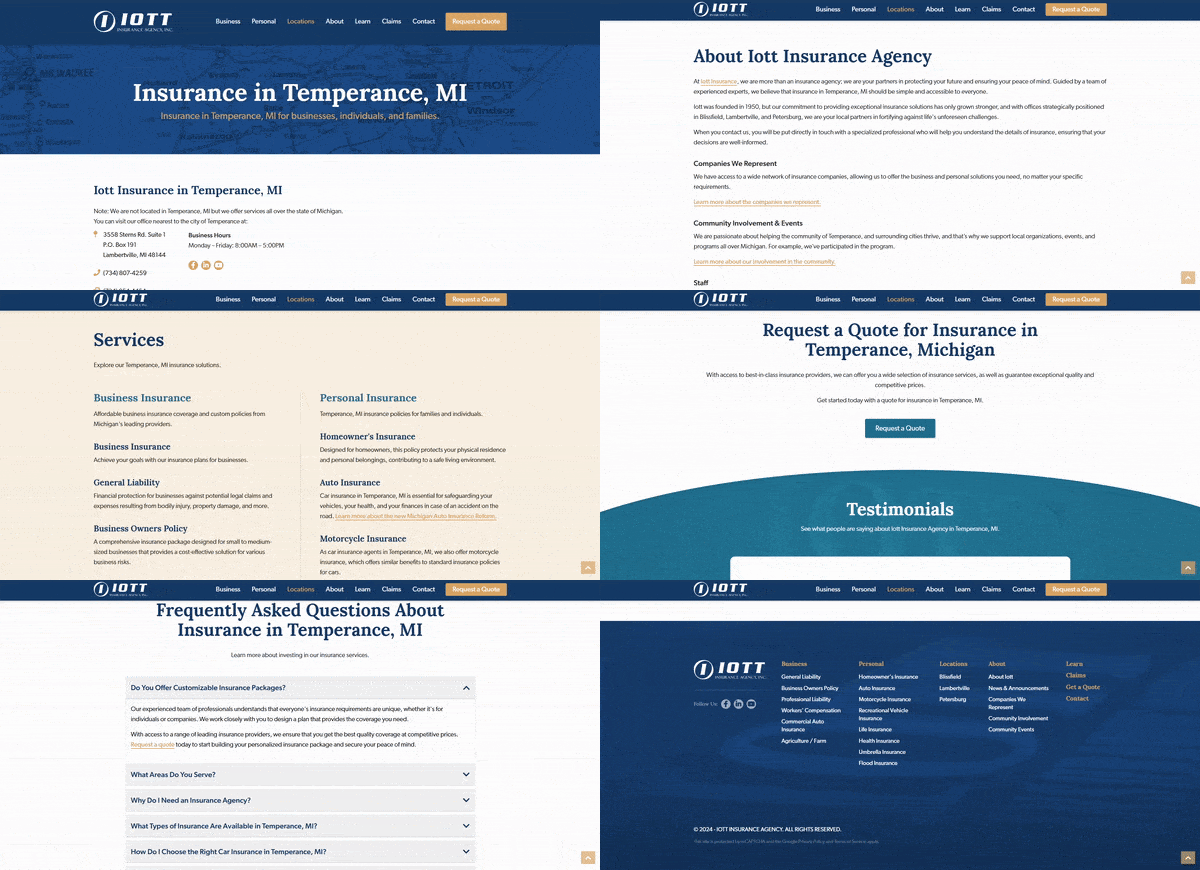
2. Insurance in Temperance, MI – Iott Insurance Agency
Iott’s landing page is simple, yet functional. While it doesn’t contain any animations, it includes a wealth of content about their services, background, address, and social profiles. This page also includes several FAQs to answer some common questions customers might have.
Professional Website Design & Digital Marketing With Artonic
At Artonic we have over 19 years of experience in digital marketing and website design. We have worked with dozens of clients to improve their digital marketing outcomes with high-converting landing pages that are also fully optimized for search engines like Google.
Learn more about our services or contact us to get started today. We offer FREE consultations!
Frequently Asked Questions
Learn more about the topic: landing page vs blog.
Is a Landing Page the Same as a Blog?
No, while both landing pages and blogs contribute to a website’s overall strategy, their purposes, layouts, and content are different. A landing page is designed to encourage immediate action, whereas a blog helps in building long-term relationships.
What’s an Example of a Landing Page?
At Artonic we have developed and implemented hundreds of landing pages for our clients. However, we also have many landing pages on our own website!
An example would be our “Pricing” landing page. This landing page is extremely simple, but it contains a comprehensive pricing guide that users can download and a form so that possible customers can contact us and request a quote right away.
What Is the Difference Between a Website & a Landing Page?
When comparing a blog vs a landing page, you may also be wondering what the differences are between a website and a landing page. The key difference between a website and a landing page lies in their structure and purpose.
A website is a collection of interconnected pages that serve various purposes, such as providing information about a business, showcasing products or services, and offering resources like blogs, contact forms, or portfolios.
A landing page, however, is a single, standalone web page with a specific focus, usually created for marketing or advertising campaigns. The primary goal of a landing page is to drive a particular action, such as making a purchase, filling out a form, or downloading a resource.
Do Landing Pages Rank Well in Search Engines Like Blogs?
Both landing pages and blog posts can rank well in search engines, they just target different keywords as their purpose is different. Blog posts are better suited for informational keywords while landing pages are better suited for commercial keywords.
In other words, landing pages are better for attracting traffic ready to convert into leads or customers while blog posts help build brand awareness and build long-term relationships.